


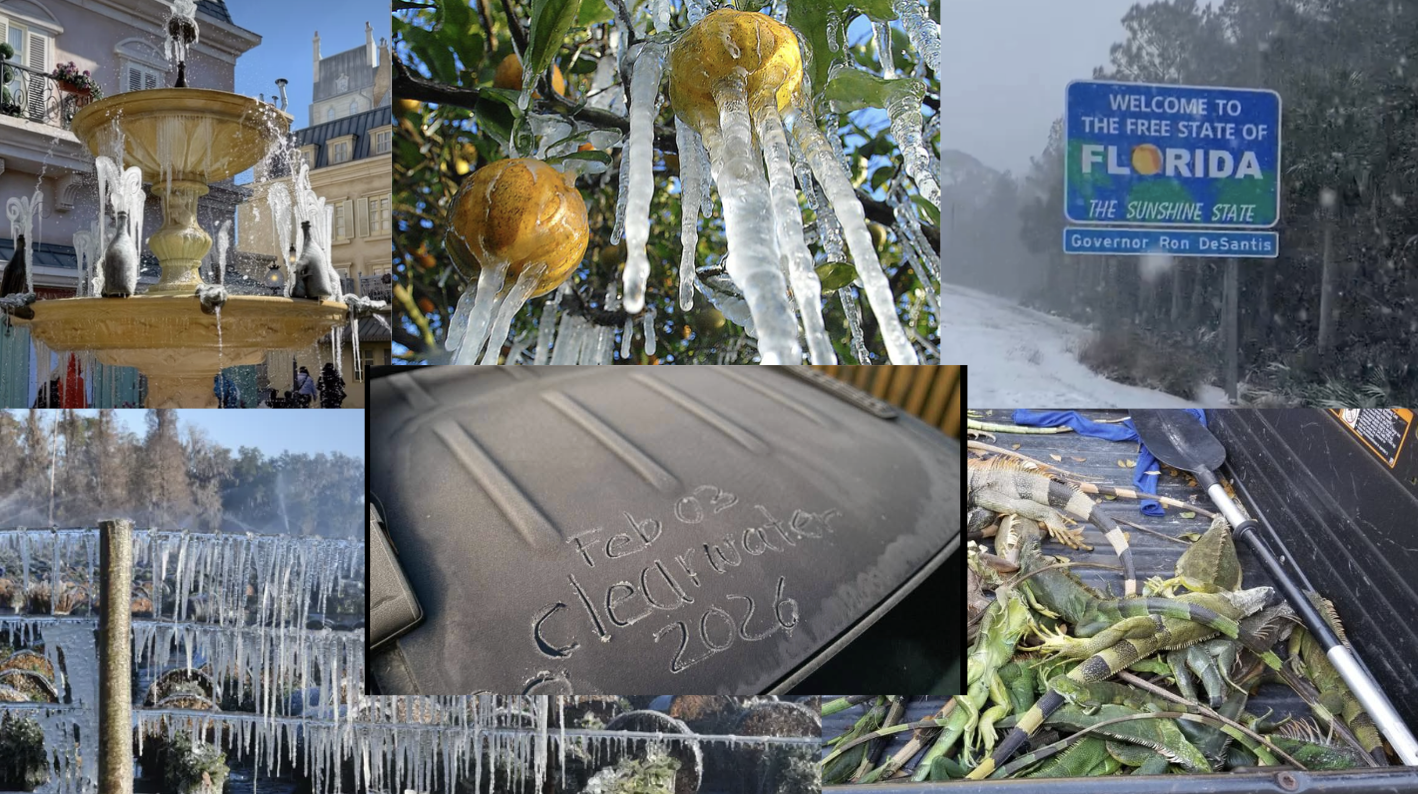
From February 1-2, 2026, a record-breaking cold front impacted Florida, with many residents experiencing snow, flurries, and frost.
Up in Northern Florida, similar to their 2025 winter season, dropped to about 22 degrees Fahrenheit, with most residents reporting it felt more like 10 degrees, making it roughly 13 degrees cooler than Anchorage, Alaska at the time. In Central Florida, temperatures plunged to around 24 degrees Fahrenheit, breaking a near century-held record given that temperatures were below freezing for multiple hours. To the surprise of local residents, Southern Florida was not an exception to this arctic blast. The low experienced was 35 degrees Fahrenheit, breaking a record that had stood since 1909.
Brielle Slenn (‘28) said, “Even though at times the cold wasn’t comfortable it gave us a break from the hot air, which I thought was a nice change.”
Besides making an impact on the residents’ attires and heating systems, there were many other repercussions of this change in weather. In the agricultural sector, especially in farm-based places like Plant City, many crops were damaged due to the freezing temperatures, with some estimating a loss up to 1.5 billion dollars. Moreover, in southern Florida thousands of invasive green iguanas were cold-stunned, immobilizing their muscles, and causing them to fall from trees. This prompted removal efforts from the Florida Fish and Wildlife Conservation Commission and residents, with some iguanas left to recover and others in a condition where they were euthanized.
View this post on Instagram
Junior Fiona Wall said, “The weather differed from Florida’s typical weather, because it was a lot drier and frigid. There was even frost, but I think that just has to do with the natural way the earth works.”
Most residents found the cold front as something peculiar, and a majority were joyful, because they got to experience phenomenal weather, such as snow flurries, frost, and even snow. However, behind this winter beauty there is a constant sign of climate change, which keeps impacting the world each day more frequently.
Climate change has been occurring since the Industrial Revolution, which occurred in the 19th century, due to the increase in use of fossil fuels like coal, oil, and gas. These emissions trap heat in the atmosphere, thereby causing global temperatures to rise. While most individuals associate climate change with warmer weather, it also contributes out-of-the-ordinary cold snaps, like the one Florida experienced. Climate change disrupts normal weather patterns, leading to an increase in extreme weather, such as temperature, unexpected storms, and unpredictable precipitation. Due to this, scientists warn that such irregular events are likely to become more common in the future.
Governments, organizations, and individuals worldwide are attempting to combat climate change through a variety of strategies. Most prominently is the utilization of renewable energy sources, such as wind, solar, and even hydroelectric power are being promoted, seeking to reduce dependence on fossil fuels. Moreover, many cities are implementing stricter emission limits, planting more trees, and encouraging public transportation to reduce carbon footprint. Despite these efforts, challenges persist. This includes but is not limited to: the use of fossil fuels remaining high, policies varying between countries, and communities lacking the resources to implement sustainable solutions. Consequently, the progress has been slower than what scientists have predicted to prevent the most negative outcomes.
If climate change progresses, according to the World Wildlife Fund, there are various things at stake, such as:
-Sea level rise, which could affect an estimated amount of 1 billion people by 2050.
-Coral reef degradation, given that changes in water temperature makes them susceptible to disease and death.
-Arctic sea ice receding to a great extent, with the possibility of ice-free summers becoming a reality for the region.
-Increase in more frequent and heavier rainfall, snowfall, and other other precipitation, consequently raising the risk of flooding.
Therefore, while Florida’s early February arctic blast offered a brief insight into the classical “winter wonderland,” it also serves as a reminder of how unpredictable and intense weather patterns are becoming. By understanding the science behind these changes and taking climate action, residents can help protect their communities and the overall environment for future generations.


