

In December 2025 to early 2026, Iranians gathered together to protest against their authoritarian, theocratic regime, known as the Islamic Republic of Iran, which is led by the Supreme Leader, Ayatollah Ali Khamenei. The Supreme Leader in Iran is not an elected official, and sets domestic and foreign policy. At the end of 2025, they saw high inflation, causing the severe economic crisis to begin. The Iranian currency, called the Rial, collapsed. That, coupled with the longstanding social and political repression on the Iranian people by the ruling regime led to massive protests throughout the country.
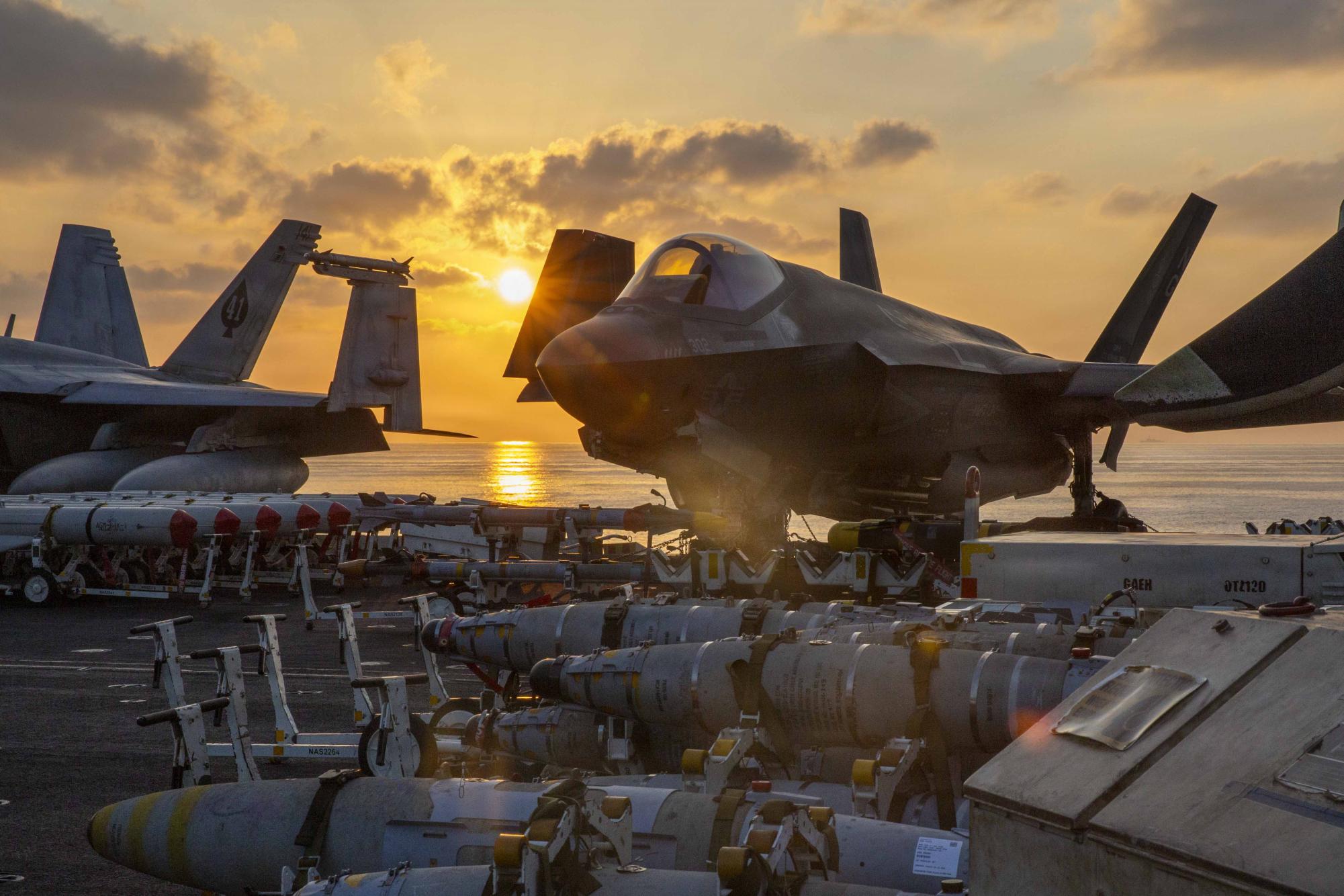
However, on January 8 and 9, the regime caused an intentional internet blackout throughout the country and began to massacre the protestors. This blackout made it difficult for the rest of the world to gain accurate and real-time information on the current events. President Donald Trump, in response to the massacres, stated that America will be there for the people. On February 28, the United States and Israel launched airstrikes against Iran to destroy their nuclear and missile capabilities, making sure the Islamic Republic of Iran will never have nuclear weapons. According to the U.S. Department of the State, Iran is the world’s leading state sponsor of terrorism, which is why they cannot acquire nuclear weapons that would threaten the world. The military campaign to eliminate the nuclear threat posed by Iran, Operation Epic Fury, has hit most of the targets so far, including the Ayatollah himself, but time will tell how successful it will be.
View this post on Instagram
U.S. Central Command (CENTCOM), headquartered at MacDill Air Force Base in Tampa, is responsible for overseeing all military operations in the Middle East, North Africa, and Central/South Asia. It covers crucial regions, crossing 21 nations. Admiral Brad Cooper, is the head of CENTCOM, currently the commanding officer for Operation Epic Fury. Under his direction, his staff defines mission goals, adjusts targets, prioritizes targets, and coordinates air, naval, and ground actions in Iran. All military strike orders come from CENTCOM, which is essentially the brain of Epic Fury.
Statements from the U.S. Administration since day one have included our military objectives. Pete Hegseth, Secretary of Defense, states “the mission of Operation Epic Fury is laser-focused: Destroy Iranian offensive missiles, destroy Iranian missile production, destroy their navy and other security infrastructure – and they will never have nuclear weapons.”
For several decades, the United States has intensely spoken about the importance of not allowing Iran to possess nuclear weapons. The topic of Iran and nuclear power came into focus in 2002 when Iran’s secret nuclear facilities were exposed, causing concern around the world. Even in present day, President Donald Trump has stated that “Iran cannot have a nuclear weapon” many times.
In a press conference with General John D. Caine, who is the Chairman of the Joint Chiefs of Staff and the top military adviser, Hegseth states, “Iran has terrorized the United States and our interests for 47 years. Their core industries, not steel or agriculture, tourism, their core industries are state-sponsored terrorism, proxy militias, underground networks, ballistic missiles and a violent messianic Islamist ideology chasing some sort of apocalyptic endgame. A regime like that, refusing to abandon its nuclear ambitions, is not just a regional problem. It’s a direct threat to America, to freedom and to civilization.”
Michael Valdes, varsity softball coach here at Academy and Managing Director of the Valdes Group, a financial and private wealth management firm, states, “since the beginning, the Iranian regime has stated they would nuke Israel. You can’t beat an enemy who has no regard for their own life. They have declared a Holy war – their Jihad – against us and Israel. They are known to be a terrorist state for decades. They kill Westerners, kill Jews, and it won’t change unless the regime changes.”
After the protests were occurring, Iran’s economy was in disarray and protestors were being massacred by the regime, Trump urged Iran to come to the negotiating table and to stop killing their people. About a month went by and they met three times but nothing came out of it. Two days after the last meeting was the day of the attack.
The first attacks by the United States and Israel were made to target military sites and the leadership in Iran’s capital, Tehran. During these strikes, the leader of Iran, Ayatollah Ali Khamenei, who was in power for the last 36 years, was killed. After his death, his son, Mojtaba Khamenei, who was also injured in the same attack, was appointed leader. Even if an Iranian Supreme Leader is removed, a successor is quickly appointed, which allows the regime to stay in power, making it harder to dismantle.
As Americans, the most important and responsible questions to ask our government leaders are “what are the objectives” and “why are we doing this now.” Secretary of State, Marco Rubio, when asked “why now” about this operation, states, “it was abundantly clear that if Iran came under attack by anyone, the United States or Israel or anyone, they were going to respond and respond against the United States.” The U.S. government knew that Israel was going to target the leaders in Iran. The Israeli Intelligence Agency, known as Mossad, working with American CIA operatives, tracked where the Iranian leaders were all meeting. The U.S. understood that Iran would have retaliated at both Israel and us, and given the intelligence received, knew that the time to attack was now. Rubio confirms this by saying “we knew that there was going to be an Israeli action, we knew that that would precipitate an attack against American forces, and we knew that if we didn’t preemptively go after them before they launched those attacks, we would suffer higher casualties and perhaps even higher those killed, and then we would all be here answering questions about why we knew that and didn’t act.”
Iran as a threat is not something new. The Iranian regime has been terrorizing us for the past 47 years. In 1979, when the current regime took power, they took Americans hostage in Tehran for well over a year. In 2002, Daniel Pearl, an American Jewish journalist, was kidnapped and beheaded on national television by terrorists in Pakistan. In 2003, Shiite militias, supplied by Iran, used lethal bombs which killed and wounded hundreds of U.S. soldiers. Even in the 2020s, groups backed by Iran have targeted American interests in Iraq and Syria. When the regime took power in 1979, one of their first actions was capturing Americans and taking them hostage.
“Prior to this event, Tehran was a vibrant city like many other gulf nations. It was safe and economically stable. Then there was a regime change. They became more political, more violent, women weren’t respected and treated like animals. The regime was radical and for many decades, they haven’t supported the West, the way we think, and they proclaim ‘Death to America’ and ‘Death to Israel,’” said Valdes.
As of right now, the U.S. and Israel have had major successes. Given all that, the Iranian regime still refuses to surrender. They continue to launch missiles and drones on us and other neighboring Middle Eastern targets. They also will not stop publicly executing protestors. They recently hung a 19-year-old Olympic wrestler, Saleh Mohammadi, in public along with two others due to their roles in the protests. Iran continues to threaten women, such as the women soccer team, who refused to sing the Iranian national anthem in Australia, and are now afraid of going home. In Iran, the families of the women soccer team are being targeted.
Whether you agree with this conflict or disagree, it is important to keep open dialogue. Complex events such as this could have long lasting effects on all of us in our country and countries throughout the world. Open debates and discussions are needed for preserving our American democracy. We, as citizens of America, have an obligation to look deeply into topics to make a valid opinion and to not be afraid of debates.
In that regard, looking at this conflict with a critical eye, some on the Democratic side argue that, as Hakeem Jeffries, Minority Leader of the House of Representative, states, “Donald Trump has unconstitutionally and illegally chosen to launch a war…And there’s a requirement under the Constitution that it’s the members of Congress. We’ll make the decision.” In a press conference with Rubio, a question about Congress is asked and he answers, “we notified Congress…We notified the congressional leadership. There’s no law that requires us to do that; the law says we have to notify them 48 hours after beginning hostilities. We’ve done that…But we did notify members of Congress in advance…there’s no law that requires the President to have done anything with regards to this. To begin with, no presidential administration has ever accepted the War Powers Act as constitutional – not Republican presidents, not Democratic presidents.” These statements represent the key area of debate between the Democrats and the Republicans, and one that every American should pay close attention to.
“In short, we are looking at a historic power vacuum and a complete realignment of the Middle East. With Iran’s central authority and military severely degraded, we’re going to see a volatile scramble for regional dominance by powers like Saudi Arabia and Turkey, while Tehran’s proxy networks likely fracture into unpredictable, decentralized militias. Beyond the geopolitics, the disruption to the Strait of Hormuz has already sent shockwaves through global energy markets. This isn’t just a localized conflict; it’s a structural shift that will force the entire world to rethink its economic and security dependencies in the region,” said Chris Hoffman, high school History teacher.
This is a significant event in history that will have lasting political, economic, and global impacts, which is why it is important to look to credible sources, especially now with heavy influence from social media, to keep informed and establish your own opinion based on historical facts and balanced reporting. It’s important for every American to look at all sides of the argument, look to historical precedence, and understand U.S. law, rather than rely on emotional rhetoric.


