


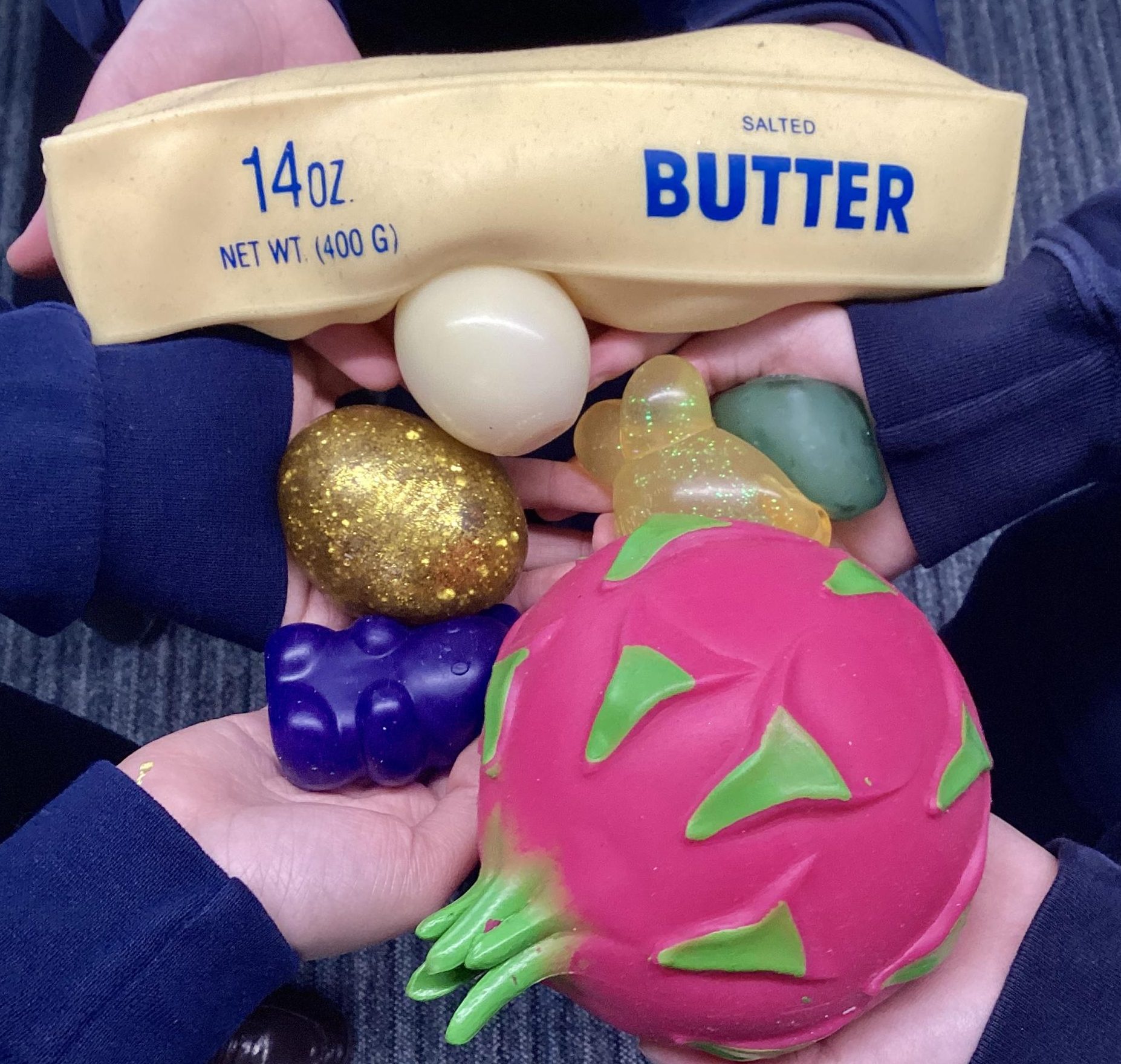
Around the Academy, squishy toys have become the newest fad. In nearly every classroom, students can be found playing with these squishies of all different shapes, sizes, textures, and malleabilities. What started as a small trend quickly transformed into a campus-wide craze.
Fidget toys are far from new. They have helped with attention span issues and calmed anxiety for many people by engaging their minds and hands. People have been using fidgets for centuries. As early as 1000 BC, people in Greece, Ireland, Tibet, and Native America created worry stones, which were smooth pebbles that they rubbed between their fingers to help with stress. In ancient China, soldiers would carry walnuts in their pockets to fidget with and help them focus during battle.
These practices eventually evolved into modern-day fidget tools. In the 2010s, toys like fidget spinners and slime became extremely popular in schools nationwide. Today, squishies have taken over this rank at the Academy.
Many students enjoy playing with squishies while they are in class to help them focus and stay motivated. “Squishies are the highlight of my day. It brings joy to my life when one of my friends hands me a squishy to play with during class. They help me concentrate and not get bored by giving me something to do. Everybody else also gets really excited to pass them around and use them,” said Claudia Ruiz-Carus (‘27).
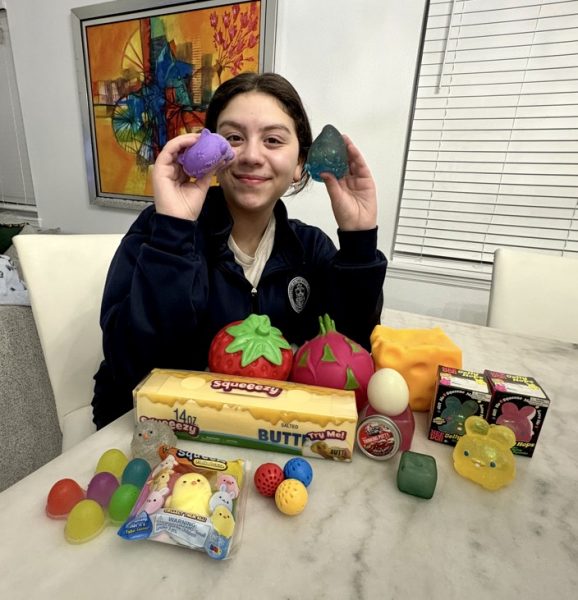
Sophia Taveras (‘27) is one of the biggest proponents of the squishy trend. She ran a slime business from 1st to 3rd grade and from there progressed to fidget spinners and eventually squishies. Currently, she owns around 30 squishies. “I’ve always been a fidget kid,” said Taveras. “They are not just a trend for me, they are a lifestyle.”
Some teachers, however, are not as on board the squishy trend as their students. “My first knee-jerk reaction is that I need to wash my hands,” English teacher Sabrina Martinez says. “I don’t know how many germs there are. Everyone is touching them. Contagion is spreading.”
“They are a byproduct of culture consumed by consumerism,” says social studies teacher Chandler Jackson. “I couldn’t care less whether or not you use them in my classroom.”

This debate raises an important question: are squishies helpful learning tools, distractions, or simply another passing trend?
Researchers say that fidget toys and squishies can be hugely beneficial for many people, especially students. Fidgets are tactile tools, which can help increase concentration on certain tasks. For students, this can mean focusing more on an on and in-class assignment or a lecture. Fidgets are also proven to assist conditions like ADHD and Autism.
Kara Solomon, high school guidance counselor, says, “Fidget toys are great for automatic reinforcement. When students have outside stimulation from a fidget toy or chew ring, it can be calming for anxiety or as a functional replacement for undesirable behavior.”
Another wonderful quality of squishies is the community they have created around the Academy. “I love them and I love being able to share them with other people because it creates connections,” Sophia Taveras said. “My favorite is probably the Fuzz Wild Cat Needoh, and I have like five on the way right now.”


Macarena Mejia • Mar 3, 2026 at 9:21 am
#LoveMyNicecube
sophia taveras • Feb 24, 2026 at 10:32 am
SO AMAZING