


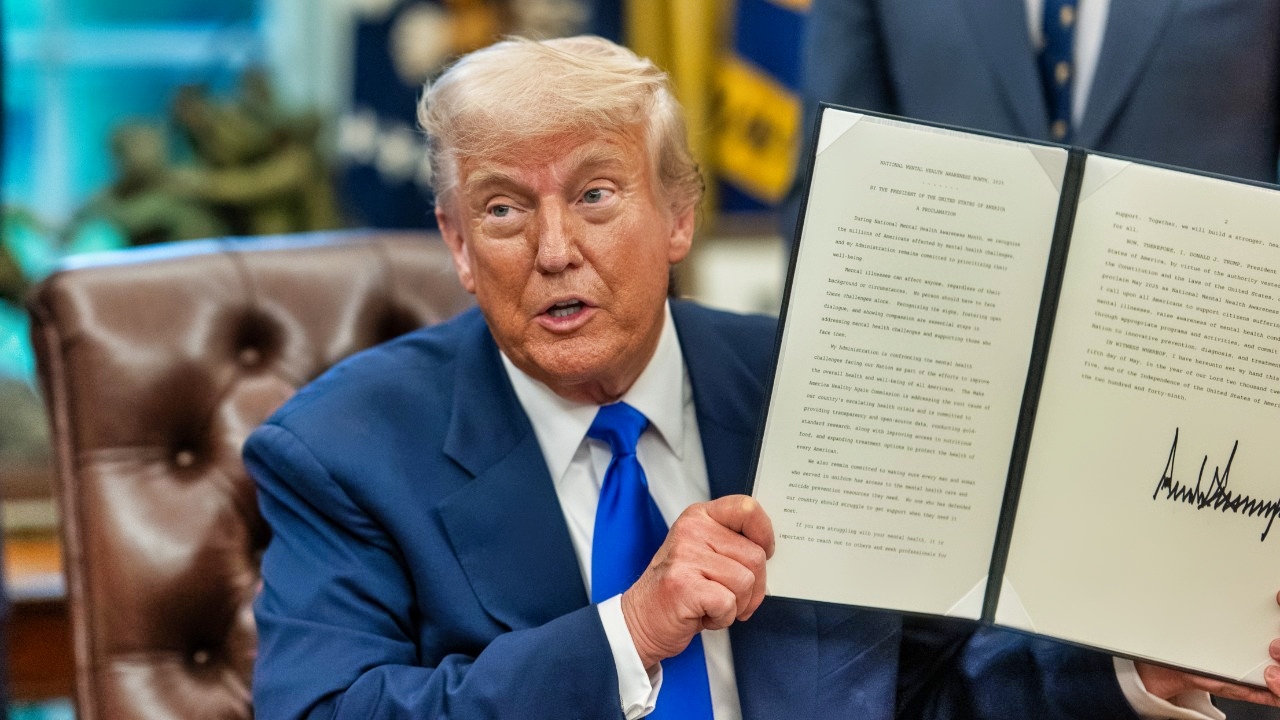
On January 20, 2025, current president Donald J. Trump was inaugurated into his second term. In his inaugural address, President Trump made promises to “put America first” and “create a nation that is proud, prosperous, and free.” The moment he was sworn into office, he immediately took action by signing “historic executive orders,” in his words. Following the one-year anniversary of Trump’s second inauguration, what has the 47th president fulfilled in the first quarter of his final term?
January 6 Pardons
One of President Trump’s first actions when he took office in 2025 was to pardon thousands of participants in the riot in the U.S. Capital on January 6, 2021 who had previously been arrested. The day of his inauguration, Trump signed an executive order granting a full pardon to approximately 1,500 January 6 people who had been convicted in connection to the attack. This decision effectively erased criminal penalties for a wide range of offenses, including obstructions against Congress and violence against police officers in some cases.
The move was met with significant controversy from the public as many of those pardoned were members of far-right extremist groups like Proud Boys and Oath Keepers. Both of these groups are known for their threatening and even violent behavior, which has raised concerns about public safety following their pardon by President Trump. Critics argued that the executive order excused political violence and undermined the rule of law. On the other hand, supporters of Trump saw the pardons as corrective, arguing that those prosecuted had been unfairly targeted. The controversy surrounding the pardons quickly became a defining feature of Trump’s second term as president.
Expansion of ICE
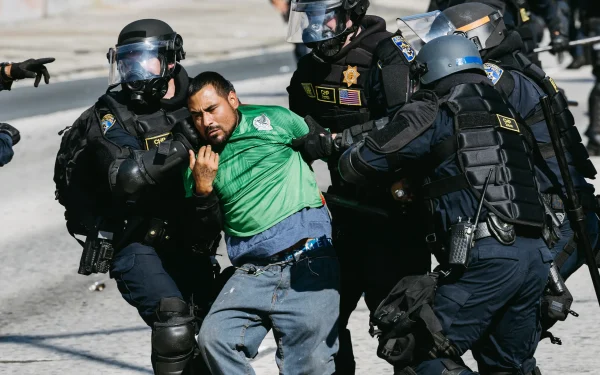
Immigration enforcement was a central issue of Trump’s campaign, and he moved quickly to fulfill his promises of border control soon after he took office. Trump expanded ICE, or U.S. Immigration and Customs Office, which was followed by a significant increase in arrests, detentions, and mass deportations. Since Trump’s inauguration, ICE has been conducting widespread raids in U.S. cities to fulfill the Trump Administration’s goal of strengthening border security.
These actions also sparked substantial controversy and criticism from human rights activists and immigrant advocacy groups. Many have raised concerns about poor conditions in ICE detention centers and the unfair treatment of detainees. In 2025, 230 people died at ICE detention centers due to reported neglect and unsanitary conditions. Additionally, the violent nature of ICE raids has raised eyebrows across the country, particularly surrounding high-profile examples. In early January, Renee Good was shot and killed by ICE in Minnesota while dropping her son off at school. This prompted serious discussion about the role of law enforcement under the Trump Administration. Critics argued that these practices targeted vulnerable populations and supported police brutality. Supporters of the administration have said that expanded enforcement was necessary to protect national security and deter illegal immigration.
Withdrawal from the Paris Climate Agreement
Trump had previously withdrawn the U.S. from the Paris Climate Agreement, an effort by the United Nations to reduce greenhouse gas emissions, at the beginning of his first term in 2017. However, this action was overturned by former President Joe Biden in 2021. Upon beginning his second term, Trump once again initiated the withdrawal process. He argued that the agreement imposed unfair economic burdens on American workers and said he wanted to keep the U.S. climate effort domestic.
Climate activists have expressed their concerns that this decision will weaken global efforts to combat climate change. They emphasize that the Paris Agreement fosters international cooperation and withdrawing from the agreement will damage the United States’ relationship with other countries. Proponents share that the decision prioritized American economic interests and independence. As of 2025, the United States remains separated from the Paris Climate Agreement per President Trump’s executive order.
AP Environmental Science teacher Raymond Rodriguez says, “I think this really has to do with big corporations. Some of the regulations for pollution take away profit opportunities, so pulling out of the agreement gives more opportunities for financial improvement.”
Increase on Tariffs
Trade policy was another major focus of Trump’s economic agenda, particularly through the expansion of tariffs on foreign goods. Trump has imposed tariffs on key trade partners such as Canada and China with the goal of raising revenue, balancing trade, and pressuring other governments to renegotiate trading terms. He has increased the tariff on Canada by 10% and China by 100%.
This act was yet again met with disapproval from Trump’s critics. Economists have raised concerns about potential disruption to global trade and strained international diplomatic relations, while supporters argued that the tariffs would encourage manufacturing in the U.S. and reduce reliance on foreign supply chains. Critics also warned that higher tariffs could lead to increased prices for American consumers and strain foreign relationships.
Capture of the Venezuelan President
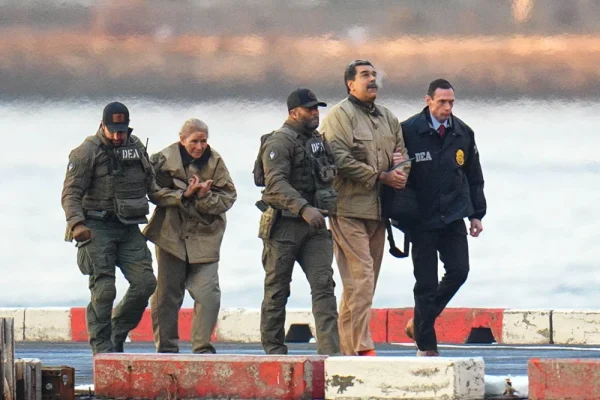
On January 3, 2026, the U.S. carried out a large-scale military strike in which they captured Venezuelan president Nicolas Maduro and his wife, Cilia Flores. The U.S. District Court for the Southern District of New York claimed that Maduro had been running gangs facilitating drug trafficking. Following the attack, Trump said that the U.S. would play a major role in governing Venezuela until a new national leader can be appointed.
Senior Parker Johnson said, “When a regime starves its people, devalues its currency, and operates as a criminal enterprise rejecting democratic vote, it is deeply insensitive and inaccurate to call said nation’s dictator ‘president’. Inaction is not neutrality but complicity. American presidents have repeatedly asserted unilateral authority under Article II to use military force without explicit congressional authorization, as seen in actions taken by the Obama and Biden administrations in Libya, Syria, and Yemen. Applying those same standards, action against Venezuela’s narco-state leadership is both ethically justified and constitutionally consistent. Critics who dismiss such action as merely ‘bad optics’ or a quest for oil miss the larger reality: under Nicolás Maduro Venezuela was deeply entwined with narcotrafficking, with criminal networks integrated into the regime and trafficking routes in the United States. While Venezuela’s people suffered, foreign communist powers like China, Russia, and Cuba entrenched themselves in the country’s wealth and political structures buying oil, propping up security forces, providing political cover, and benefiting from the collapse of Venezuelan governance in ways that undermined both American and Venezuelan security and enriched those external actors rather than alleviating the suffering of innocent families.”
Critics argued that Trump captured Maduro illegally and without the approval of Congress, garnering the action unconstitutional. Supporters claim that Maduro’s arrest was a necessary action and it benefited the people of Venezuela, as the president was known to be involved in widespread corruption.
It has been a busy year for President Trump as he is enacting significant changes to the U.S. government and the framework of the nation. His actions have accumulated both mass criticism and support, and as the U.S. finishes a year with Trump in power, proponents and detractors alike wonder what the future of the nation looks like under his administration


